



EXCLUSIVE: LAWYERS REPRESENTING ALLEGED TINUBU COUP PLOTTERS ACCUSE DIA OF MONITORING CONVERSATIONS WITH DETAINED SUSPECTS

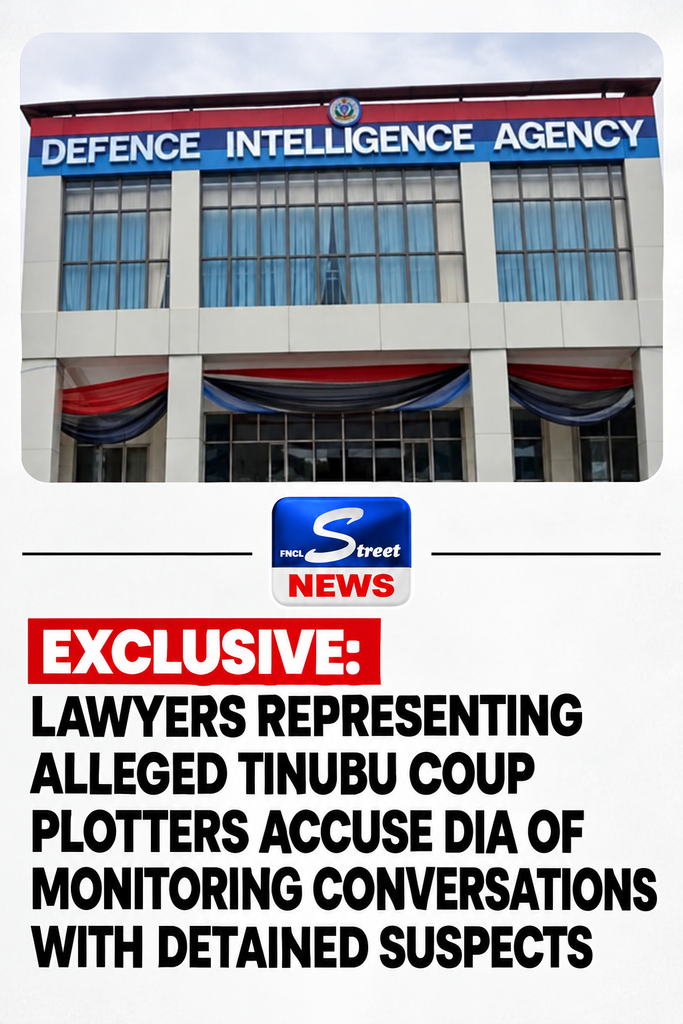
Lawyers representing military officers and other individuals accused of involvement in an alleged plot to overthrow President Bola Tinubu have accused the Defence Intelligence Agency (DIA) of denying them privacy during consultations with their detained clients.
The lawyers alleged that a DIA official was assigned to remain with them and listen to their conversations while they attempted to interview the suspects at the agency’s detention facility in Abuja on Monday, October 12, 2026.
According to the legal representatives, the arrangement prevented them from holding confidential discussions with their clients, prompting the lawyers to object and refuse to proceed with the interviews until the official was removed.
The legal team reportedly included Senior Advocate of Nigeria (SAN) Olalekan Ojo, who was among the lawyers involved in the visit. The counsel said they were surprised to discover that they would not be allowed to meet privately with the detained individuals.
One of the lawyers described the situation as unacceptable, saying an agency staff member had been attached to the legal team to listen to discussions between counsel and their clients.
The lawyers argued that the presence of a third party during such consultations could undermine the confidentiality required for effective legal representation, particularly in a case involving serious criminal allegations and ongoing judicial proceedings.
According to the legal representatives, all counsel present agreed not to conduct the interviews under the circumstances. They insisted that the agency should remove the officials assigned to monitor the conversations before consultations could continue.
The lawyers reportedly raised their objection with the DIA coordinator, who addressed their concerns but maintained that agency officials were required to be present during the interviews.
The disagreement therefore remained unresolved at the time of the report, with the legal team maintaining that confidential access to their clients was necessary for them to carry out their professional responsibilities.
The lawyers also said Ojo advised the other counsel to formally report the incident to the court in writing while awaiting a resolution. The proposed reports would allow the court to be informed of the circumstances surrounding the attempted interviews and the lawyers’ objections to the monitoring arrangement.
The allegations raise questions about the balance between security procedures at an intelligence agency’s detention facility and the rights of suspects to consult privately with their legal representatives. Whether the arrangement was authorised under applicable rules and whether it will be challenged formally in court remain matters for clarification.
The individuals at the centre of the dispute are among those accused of involvement in an alleged plot against President Tinubu. The allegations became public following the arrest of serving and retired military personnel in late September 2025.
The Defence Headquarters initially described the arrests as relating to issues of military discipline before later acknowledging that some personnel were being investigated over an alleged coup plot. Military authorities subsequently initiated disciplinary proceedings against some of the officers.
Separate criminal proceedings were also brought against several alleged conspirators before the Federal High Court in Abuja. The defendants have denied wrongdoing, while their lawyers have challenged aspects of the prosecution’s evidence and the circumstances in which some statements attributed to the accused were obtained.
The dispute over access to legal counsel adds to earlier concerns raised by relatives and lawyers about the treatment of individuals held in connection with the alleged plot. Families of detained personnel have previously called for greater access to their relatives and a transparent judicial process.
In the ongoing proceedings, defence lawyers have also questioned the admissibility of certain statements, alleging that some were obtained under coercive circumstances. The prosecution, however, has presented evidence aimed at establishing that the statements were made voluntarily. Those claims remain subject to determination through the legal process.
The latest allegation about monitored consultations could become another issue for the courts if the lawyers submit formal complaints. A judicial review may help clarify the circumstances of the incident and determine whether the arrangements were consistent with the suspects’ rights and applicable legal procedures.
The DIA has not, in the report, provided a detailed public response to the lawyers’ specific allegations. The agency’s position on the claimed monitoring arrangement and whether it intends to modify its procedures was not immediately clear.
The case has renewed attention on the importance of confidential communication between lawyers and their clients, particularly when suspects are held in security custody. Such communication allows legal representatives to obtain instructions, examine allegations and prepare their clients’ defence without interference.
The allegations do not establish that the DIA unlawfully monitored the conversations, but they highlight a dispute between the defence team and the intelligence agency over the conditions under which the interviews were to take place.
As the proceedings continue, the central questions include whether the lawyers will be granted private access to their clients, whether the incident will be formally brought before the court and how the authorities will respond to concerns about legal representation.
Street News Reporters will continue to monitor developments in the case, including any response from the Defence Intelligence Agency and further action by the lawyers representing the detained suspects.Lawyers representing military officers and other individuals accused of involvement in an alleged plot to overthrow President Bola Tinubu have accused the Defence Intelligence Agency (DIA) of denying them privacy during consultations with their detained clients.
The lawyers alleged that a DIA official was assigned to remain with them and listen to their conversations while they attempted to interview the suspects at the agency’s detention facility in Abuja on Monday, October 12, 2026.
According to the legal representatives, the arrangement prevented them from holding confidential discussions with their clients, prompting the lawyers to object and refuse to proceed with the interviews until the official was removed.
The legal team reportedly included Senior Advocate of Nigeria (SAN) Olalekan Ojo, who was among the lawyers involved in the visit. The counsel said they were surprised to discover that they would not be allowed to meet privately with the detained individuals.
One of the lawyers described the situation as unacceptable, saying an agency staff member had been attached to the legal team to listen to discussions between counsel and their clients.
The lawyers argued that the presence of a third party during such consultations could undermine the confidentiality required for effective legal representation, particularly in a case involving serious criminal allegations and ongoing judicial proceedings.
According to the legal representatives, all counsel present agreed not to conduct the interviews under the circumstances. They insisted that the agency should remove the officials assigned to monitor the conversations before consultations could continue.
The lawyers reportedly raised their objection with the DIA coordinator, who addressed their concerns but maintained that agency officials were required to be present during the interviews.
The disagreement therefore remained unresolved at the time of the report, with the legal team maintaining that confidential access to their clients was necessary for them to carry out their professional responsibilities.
The lawyers also said Ojo advised the other counsel to formally report the incident to the court in writing while awaiting a resolution. The proposed reports would allow the court to be informed of the circumstances surrounding the attempted interviews and the lawyers’ objections to the monitoring arrangement.
The allegations raise questions about the balance between security procedures at an intelligence agency’s detention facility and the rights of suspects to consult privately with their legal representatives. Whether the arrangement was authorised under applicable rules and whether it will be challenged formally in court remain matters for clarification.
The individuals at the centre of the dispute are among those accused of involvement in an alleged plot against President Tinubu. The allegations became public following the arrest of serving and retired military personnel in late September 2025.
The Defence Headquarters initially described the arrests as relating to issues of military discipline before later acknowledging that some personnel were being investigated over an alleged coup plot. Military authorities subsequently initiated disciplinary proceedings against some of the officers.
Separate criminal proceedings were also brought against several alleged conspirators before the Federal High Court in Abuja. The defendants have denied wrongdoing, while their lawyers have challenged aspects of the prosecution’s evidence and the circumstances in which some statements attributed to the accused were obtained.
The dispute over access to legal counsel adds to earlier concerns raised by relatives and lawyers about the treatment of individuals held in connection with the alleged plot. Families of detained personnel have previously called for greater access to their relatives and a transparent judicial process.
In the ongoing proceedings, defence lawyers have also questioned the admissibility of certain statements, alleging that some were obtained under coercive circumstances. The prosecution, however, has presented evidence aimed at establishing that the statements were made voluntarily. Those claims remain subject to determination through the legal process.
The latest allegation about monitored consultations could become another issue for the courts if the lawyers submit formal complaints. A judicial review may help clarify the circumstances of the incident and determine whether the arrangements were consistent with the suspects’ rights and applicable legal procedures.
The DIA has not, in the report, provided a detailed public response to the lawyers’ specific allegations. The agency’s position on the claimed monitoring arrangement and whether it intends to modify its procedures was not immediately clear.
The case has renewed attention on the importance of confidential communication between lawyers and their clients, particularly when suspects are held in security custody. Such communication allows legal representatives to obtain instructions, examine allegations and prepare their clients’ defence without interference.
The allegations do not establish that the DIA unlawfully monitored the conversations, but they highlight a dispute between the defence team and the intelligence agency over the conditions under which the interviews were to take place.
As the proceedings continue, the central questions include whether the lawyers will be granted private access to their clients, whether the incident will be formally brought before the court and how the authorities will respond to concerns about legal representation.
Street News Reporters will continue to monitor developments in the case, including any response from the Defence Intelligence Agency and further action by the lawyers representing the detained suspects.
Lawyers representing military officers and other individuals accused of involvement in an alleged plot to overthrow President Bola Tinubu have accused the Defence Intelligence Agency (DIA) of denying them privacy during consultations with their detained clients.
The lawyers alleged that a DIA official was assigned to remain with them and listen to their conversations while they attempted to interview the suspects at the agency’s detention facility in Abuja on Monday, October 12, 2026.
According to the legal representatives, the arrangement prevented them from holding confidential discussions with their clients, prompting the lawyers to object and refuse to proceed with the interviews until the official was removed.
The legal team reportedly included Senior Advocate of Nigeria (SAN) Olalekan Ojo, who was among the lawyers involved in the visit. The counsel said they were surprised to discover that they would not be allowed to meet privately with the detained individuals.
One of the lawyers described the situation as unacceptable, saying an agency staff member had been attached to the legal team to listen to discussions between counsel and their clients.
The lawyers argued that the presence of a third party during such consultations could undermine the confidentiality required for effective legal representation, particularly in a case involving serious criminal allegations and ongoing judicial proceedings.
According to the legal representatives, all counsel present agreed not to conduct the interviews under the circumstances. They insisted that the agency should remove the officials assigned to monitor the conversations before consultations could continue.
The lawyers reportedly raised their objection with the DIA coordinator, who addressed their concerns but maintained that agency officials were required to be present during the interviews.
The disagreement therefore remained unresolved at the time of the report, with the legal team maintaining that confidential access to their clients was necessary for them to carry out their professional responsibilities.
The lawyers also said Ojo advised the other counsel to formally report the incident to the court in writing while awaiting a resolution. The proposed reports would allow the court to be informed of the circumstances surrounding the attempted interviews and the lawyers’ objections to the monitoring arrangement.
The allegations raise questions about the balance between security procedures at an intelligence agency’s detention facility and the rights of suspects to consult privately with their legal representatives. Whether the arrangement was authorised under applicable rules and whether it will be challenged formally in court remain matters for clarification.
The individuals at the centre of the dispute are among those accused of involvement in an alleged plot against President Tinubu. The allegations became public following the arrest of serving and retired military personnel in late September 2025.
The Defence Headquarters initially described the arrests as relating to issues of military discipline before later acknowledging that some personnel were being investigated over an alleged coup plot. Military authorities subsequently initiated disciplinary proceedings against some of the officers.
Separate criminal proceedings were also brought against several alleged conspirators before the Federal High Court in Abuja. The defendants have denied wrongdoing, while their lawyers have challenged aspects of the prosecution’s evidence and the circumstances in which some statements attributed to the accused were obtained.
The dispute over access to legal counsel adds to earlier concerns raised by relatives and lawyers about the treatment of individuals held in connection with the alleged plot. Families of detained personnel have previously called for greater access to their relatives and a transparent judicial process.
In the ongoing proceedings, defence lawyers have also questioned the admissibility of certain statements, alleging that some were obtained under coercive circumstances. The prosecution, however, has presented evidence aimed at establishing that the statements were made voluntarily. Those claims remain subject to determination through the legal process.
The latest allegation about monitored consultations could become another issue for the courts if the lawyers submit formal complaints. A judicial review may help clarify the circumstances of the incident and determine whether the arrangements were consistent with the suspects’ rights and applicable legal procedures.
The DIA has not, in the report, provided a detailed public response to the lawyers’ specific allegations. The agency’s position on the claimed monitoring arrangement and whether it intends to modify its procedures was not immediately clear.
The case has renewed attention on the importance of confidential communication between lawyers and their clients, particularly when suspects are held in security custody. Such communication allows legal representatives to obtain instructions, examine allegations and prepare their clients’ defence without interference.
The allegations do not establish that the DIA unlawfully monitored the conversations, but they highlight a dispute between the defence team and the intelligence agency over the conditions under which the interviews were to take place.
As the proceedings continue, the central questions include whether the lawyers will be granted private access to their clients, whether the incident will be formally brought before the court and how the authorities will respond to concerns about legal representation.
Street News Reporters will continue to monitor developments in the case, including any response from the Defence Intelligence Agency and further action by the lawyers representing the detained suspects.
