



BREAKING: ISWAP Fighters Reportedly Kill 15 Soldiers, Burn Military Vehicles In Borno Attack

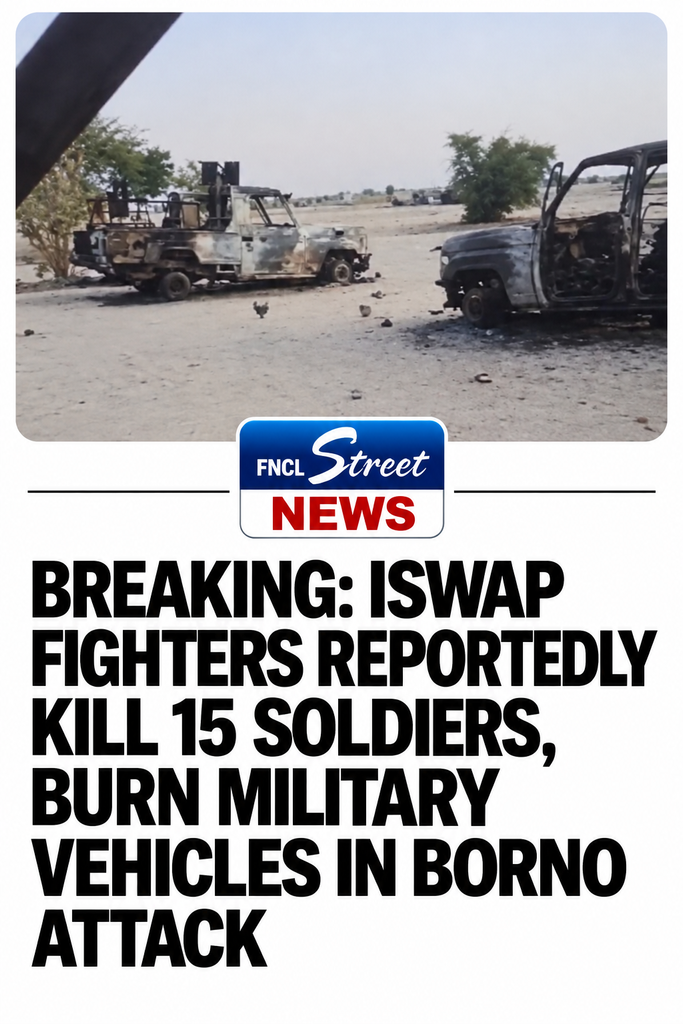
Suspected fighters of the Islamic State West Africa Province (ISWAP) have reportedly killed about 15 Nigerian soldiers and set several military vehicles ablaze during an attack on a military base in Borno State, raising fresh concerns over the persistent security challenges facing troops battling insurgency in the North-East.
The attack reportedly occurred on Tuesday night, October 13, 2026, at a military installation in Mairari, Guzamala Local Government Area of Borno State. According to reports citing military sources, the insurgents stormed the base in large numbers and engaged troops in a prolonged exchange of gunfire.
Sources familiar with the incident said the attackers overwhelmed the military position during the confrontation, resulting in significant casualties among the personnel stationed at the facility. Approximately 15 soldiers were reportedly killed, although the precise number of casualties has not been confirmed in an official military statement.
Several other soldiers were reportedly injured during the attack, while some personnel were said to be missing after the confrontation. The circumstances surrounding the missing soldiers, including whether any were captured or managed to escape, had not been independently established in the reports available as of October 15.
The attackers also reportedly destroyed military equipment and set several vehicles ablaze. Footage circulated after the incident was said to show burnt military gun trucks, Hilux vehicles and makeshift shelters within the affected installation.
Other images reportedly showed extensive damage to defensive positions and structures inside the base. The destruction suggests that the facility sustained substantial damage during the assault, although the full extent of the losses has not been officially documented.
The reported attack has renewed concerns about the vulnerability of military positions in remote parts of Borno State, where insurgent groups have continued to target security installations in an effort to weaken military operations and seize equipment.
Mairari is located in the Lake Chad region of north-eastern Nigeria, an area that has experienced years of armed conflict involving Boko Haram and ISWAP. Both groups have repeatedly attacked military positions, villages and communities across the region, despite sustained counter-insurgency operations by Nigerian security forces.
The two groups have employed different tactics over the years, including coordinated assaults on military bases, attacks on civilian communities and attempts to capture weapons and other equipment. Such attacks can place considerable pressure on troops deployed to isolated locations, where reinforcements and logistical support may take time to arrive.
Reports of the Mairari assault also indicated that members of the Civilian Joint Task Force (CJTF), a local security group that supports military operations, were among those killed. Some reports put the number of CJTF members killed at five, bringing the reported combined toll among soldiers and militia members to approximately 20.
However, other accounts have provided different casualty figures and descriptions of the incident. Reuters, for example, reported that military sources and residents described at least 10 soldiers killed, alongside other casualties, during an assault in the Guzamala area. The differences in the reports underline the need for caution until authorities provide a verified account of the losses.
The military had not publicly released a comprehensive statement confirming the reported death toll or detailing the full circumstances of the Mairari attack in the reports reviewed. Efforts to obtain an official account would be important in establishing the number of personnel affected, the extent of the damage and the response mounted by troops.
The incident comes amid continued security operations across Borno State, where Nigerian forces have been engaged in efforts to contain insurgent activity and protect vulnerable communities. Military operations in the region have included ground offensives, intelligence-led missions and air support against suspected militant positions.
The repeated targeting of military installations has also raised questions about the protection of remote bases, the availability of reinforcements and the resources required to sustain operations in difficult terrain. Security analysts have frequently pointed to the importance of intelligence gathering, reliable communications and coordinated responses in reducing the risks faced by personnel stationed in isolated locations.
For families of soldiers serving in the region, reports of casualties and missing personnel bring renewed anxiety over the safety of loved ones deployed to frontline positions. The incident also highlights the sacrifices made by military personnel and local security volunteers involved in operations against armed groups.
The government and military authorities face continued pressure to provide accurate information about attacks, account for missing personnel and explain the steps being taken to prevent similar incidents. A transparent assessment of the attack could help clarify what happened and identify any operational lessons that need to be addressed.
At the same time, the reported incident should not be taken as proof that insurgents have gained lasting control over the wider area. Establishing the outcome of the confrontation, including whether troops subsequently regained control of the installation and conducted follow-up operations, requires confirmation from military authorities.
Street News Reporters will continue to monitor developments surrounding the Mairari attack, including official confirmation of the casualties, updates on missing and injured personnel, the extent of damage to military equipment and any further operations announced by the Nigerian military.
