



Taraba Pupils Forced To Learn In Roofless School Without Desks, Chairs For Over 10 Years

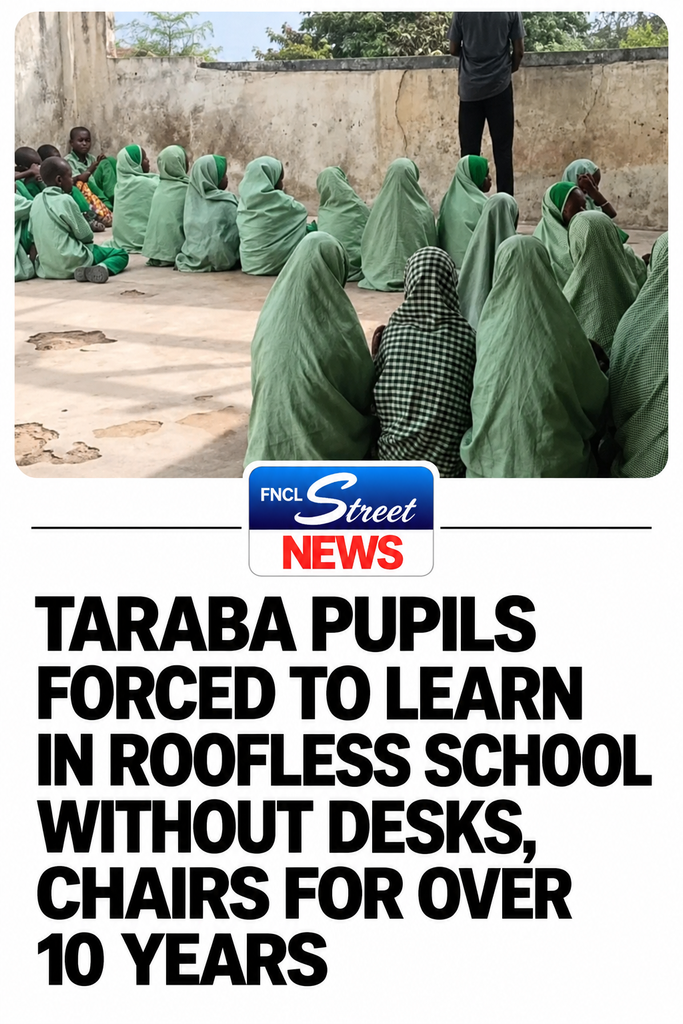
Pupils at a public school in Taraba State have reportedly been forced to learn under deplorable conditions, with classrooms lacking roofs, desks and chairs for more than 10 years, raising fresh concerns about the state of basic education infrastructure and the welfare of schoolchildren in Nigeria.
The situation has renewed questions about the responsibility of government authorities to provide safe and conducive learning environments, particularly for children attending public schools in underserved communities.
For pupils affected by the reported conditions, attending school has become a daily struggle beyond the normal challenges of learning. Without adequate classroom facilities and furniture, children may be compelled to sit on the floor or improvise arrangements to participate in lessons.
The absence of a functional roof also exposes pupils and teachers to changing weather conditions. During rainfall, lessons in classrooms without adequate roofing can become difficult or impossible, while exposure to intense sunlight may make it uncomfortable for pupils to concentrate on their studies.
The reported situation is particularly concerning because primary education plays a crucial role in children’s intellectual development, literacy, numeracy and preparation for further learning. A classroom without basic facilities can make it more difficult for teachers to deliver lessons effectively and for pupils to participate fully.
The alleged failure to provide adequate infrastructure over such an extended period also raises questions about maintenance, monitoring and the implementation of public education policies. School authorities and education officials are generally expected to identify deteriorating facilities and work with the relevant government agencies to ensure that urgent repairs are carried out.
The development comes amid wider reports of poor infrastructure in public schools across Taraba State. Previous investigations by Nigerian media outlets have documented students learning without sufficient furniture, sitting on bare floors and attending classes in buildings with damaged roofs, broken windows and deteriorating walls.
A report by The Guardian on public schools in Jalingo, the state capital, described students using the floor as both seats and writing surfaces because of inadequate desks and chairs. Teachers interviewed in the report expressed concern that the conditions were affecting students’ ability to concentrate and perform academically.
Other reports have highlighted overcrowded classrooms and shortages of basic learning materials in public schools across the state. Some parents have reportedly withdrawn their children from government schools because they were dissatisfied with the learning environment and sought better facilities elsewhere.
These concerns have raised questions about the gap between education policies designed to expand school access and the infrastructure required to support increasing enrolment. Making education accessible is an important objective, but schools also need sufficient classrooms, furniture, qualified teachers and essential learning materials to provide meaningful instruction.
Taraba State has announced education initiatives intended to improve access and strengthen school infrastructure. However, the existence of such policies does not by itself establish that every school has received the facilities it needs. The conditions reported at individual schools require direct assessment and an effective response from the responsible authorities.
The state government and relevant education agencies would need to establish the precise condition of the affected school, determine the extent of the infrastructure deficit and explain what measures are planned to address it. Any assessment should also consider the needs of pupils with disabilities and other children who may face additional barriers in an unsuitable learning environment.
Providing desks and chairs would be an important first step, but it would not fully resolve the problem if classrooms remain exposed to the weather or structurally unsafe. A lasting intervention would require appropriate roofing, repairs to damaged buildings, adequate furniture and regular maintenance to prevent the school from deteriorating again.
Community members, parents and teachers can also play an important role in drawing attention to deficiencies and monitoring public projects. Their accounts can help authorities identify urgent needs, although claims about the duration and severity of the reported conditions should be verified through an on-site inspection and official documentation.
The issue also highlights the importance of transparency in public education spending. Residents have a legitimate interest in knowing what funds have been allocated for school construction, rehabilitation and furniture, which projects have been completed, and whether the intended beneficiaries have received the promised facilities.
Where budgets have been approved for education projects, public reporting on implementation can help communities assess whether commitments are translating into tangible improvements. It can also help identify delays, incomplete projects or shortages that require additional intervention.
For the affected pupils, the immediate priority is to ensure that they can learn in a safe environment that protects their dignity and supports their education. Children should not have to endure preventable hardship simply to attend classes and acquire the skills needed for their future.
As of October 14, 2026, the report has brought renewed attention to the conditions at the school, but further information is needed to establish the full circumstances, including the identity and location of the school, the response of the relevant education authorities and any concrete plans for rehabilitation. These details are essential to determine what action has been taken and what remains outstanding.
Street News Reporters calls attention to the need for the relevant Taraba State education authorities to investigate the reported conditions, provide urgent assistance where necessary and publish a clear plan for restoring adequate learning facilities. Street News Reporters will continue to monitor developments, including any official response, inspection of the school and measures taken to ensure that the affected pupils have access to a safe and conducive learning environment.
