



Nigerian Air Force Orders Aircraft Airworthiness Checks, Maintenance Reviews After Igbokoda Crash

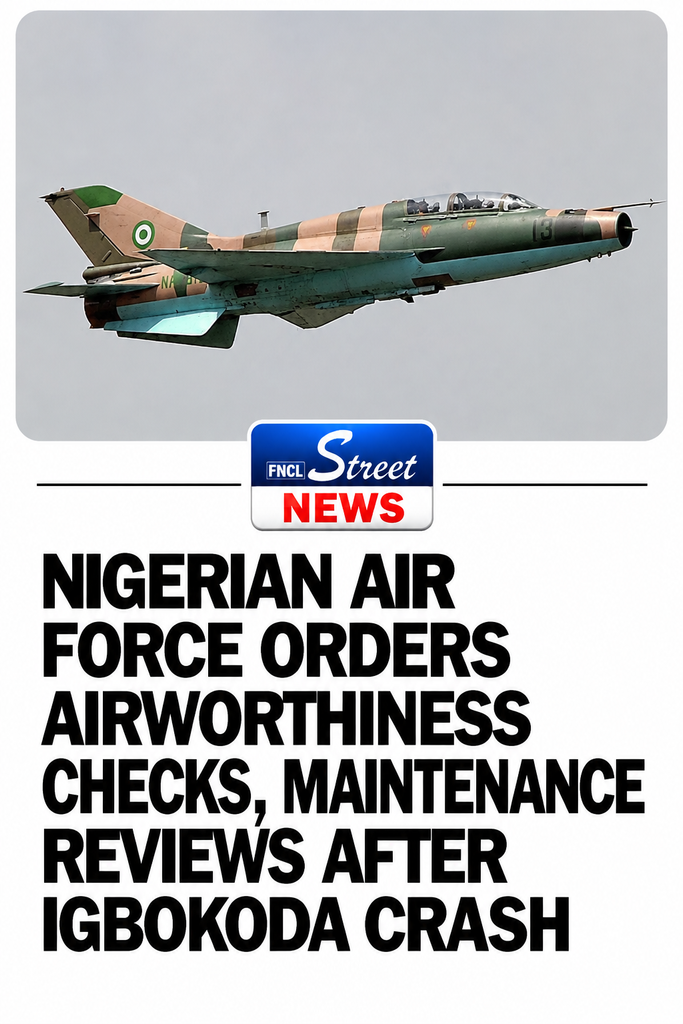
The Nigerian Air Force (NAF) has ordered stricter aircraft airworthiness checks, maintenance reviews and tighter flight safety oversight across its commands following the fatal aircraft crash in Igbokoda, Ondo State, that has raised renewed concerns about military aviation safety.
The directive was issued by the Chief of the Air Staff, Air Marshal Sunday Kelvin Aneke, on Wednesday, October 14, 2026, during a meeting with senior commanders, branch chiefs, Air Officers Commanding and other principal officers of the service.
According to the Nigerian Air Force, the measures are intended to strengthen compliance with established operational procedures, improve maintenance quality assurance and ensure that aircraft meet the required safety standards before being deployed for operations.
The directive follows the October 5 crash involving a Nigerian Air Force ATR 42-500 aircraft, identified as NAF 931, in the Igbokoda area of Ilaje Local Government Area, Ondo State. The aircraft was reportedly travelling from Benin City to Lagos on a routine mission when the accident occurred.
The aircraft was carrying 25 passengers and seven crew members, bringing the total number of people on board to 32. The crash has prompted grief within the military community and intensified calls for a comprehensive investigation into the circumstances surrounding the tragedy.
During the meeting with senior officers, Aneke expressed sorrow over the loss of personnel and acknowledged the grief experienced by the bereaved families and members of the Nigerian Air Force.
He stressed that operational effectiveness must be supported by professional discipline, sound judgment and strict adherence to flight safety procedures. He also emphasised that commanders must take responsibility for ensuring that safety requirements are consistently implemented across their respective units.
As part of the new directives, commanders were instructed to strengthen oversight of aircraft airworthiness, maintenance quality assurance, operational procedures and aircrew competence. These areas are central to ensuring that aircraft are properly maintained and operated by personnel who meet the required professional standards.
The Air Force chief also called for proactive safety monitoring and prompt reporting of potential hazards. The approach is intended to ensure that technical defects, operational risks and other safety concerns are identified and addressed before they contribute to an accident.
Aneke highlighted the resources invested in personnel training, aircraft spare parts and maintenance to support operational readiness. However, the circumstances surrounding the Igbokoda crash remain under investigation, and the new directives do not establish that a maintenance failure or any specific technical problem caused the accident.
The Nigerian Air Force has constituted a 12-member Aircraft Accident Investigation Board to determine the circumstances and causes of the crash and recommend measures to prevent a recurrence. The investigation is expected to examine relevant technical evidence, operational records and other available information.
The Air Force has also directed relevant personnel and units to preserve evidence, provide necessary documentation and cooperate fully with the investigation. Recovered aircraft components are being documented and preserved for examination as search and recovery operations continue.
The investigation is expected to consider possible operational, technical, environmental, human and organisational factors. Authorities have urged members of the public to avoid speculation until investigators establish the cause of the accident.
The incident has also triggered legislative scrutiny of military aviation safety. On October 13, the Senate called for a comprehensive audit of the serviceability and airworthiness of aircraft in the military and presidential fleets. Lawmakers also called for a review of maintenance funding and urged the relevant authorities to make the findings of the crash investigation public.
The House of Representatives has similarly called for an independent investigation and an audit of military aircraft following the tragedy. The lawmakers have raised concerns about aircraft maintenance, funding and the need to ensure that military aviation equipment remains safe and operational.
The legislative intervention has broadened the debate beyond the immediate cause of the crash to include the resources available for maintaining military aircraft. Lawmakers want the relevant committees to examine budgetary provisions for maintenance and assess whether the funding is adequate to support safe operations.
The calls for an audit come amid wider concerns over previous military aviation accidents in Nigeria. Such incidents have prompted renewed demands for stronger preventive maintenance, transparent investigations and effective implementation of safety recommendations.
Meanwhile, recovery operations at the Igbokoda crash site have continued with the involvement of specialist personnel and equipment from relevant agencies. The operation has reportedly involved excavation, water pumping and technical searches to reach areas where wreckage and other evidence may be located.
The prolonged recovery effort has also raised concerns among residents of the coastal community over the condition of the surrounding environment. Ondo State Governor Lucky Aiyedatiwa has directed relevant ministries to undertake fumigation and provide protective health supplies, while authorities assess concerns about possible contamination of the river.
The Nigerian Air Force has reaffirmed its commitment to supporting affected families and implementing appropriate safety recommendations arising from the investigation. The service has maintained that protecting personnel and improving the safety of future air operations remain priorities.
The effectiveness of the new measures will ultimately depend on consistent implementation, adequate resources, proper technical inspections and accountability where established safety procedures have not been followed. The outcome of the investigation will also be important in determining what corrective actions are required.
As of October 14, 2026, investigators had not publicly established the definitive cause of the Igbokoda crash. It would therefore be premature to attribute the accident to maintenance deficiencies, ageing aircraft or any other specific factor before the investigation is completed.
Street News Reporters will continue to monitor developments, including the findings of the Aircraft Accident Investigation Board, the progress of recovery operations, the outcome of the proposed aircraft audit and any additional safety measures announced by the Nigerian Air Force.
