




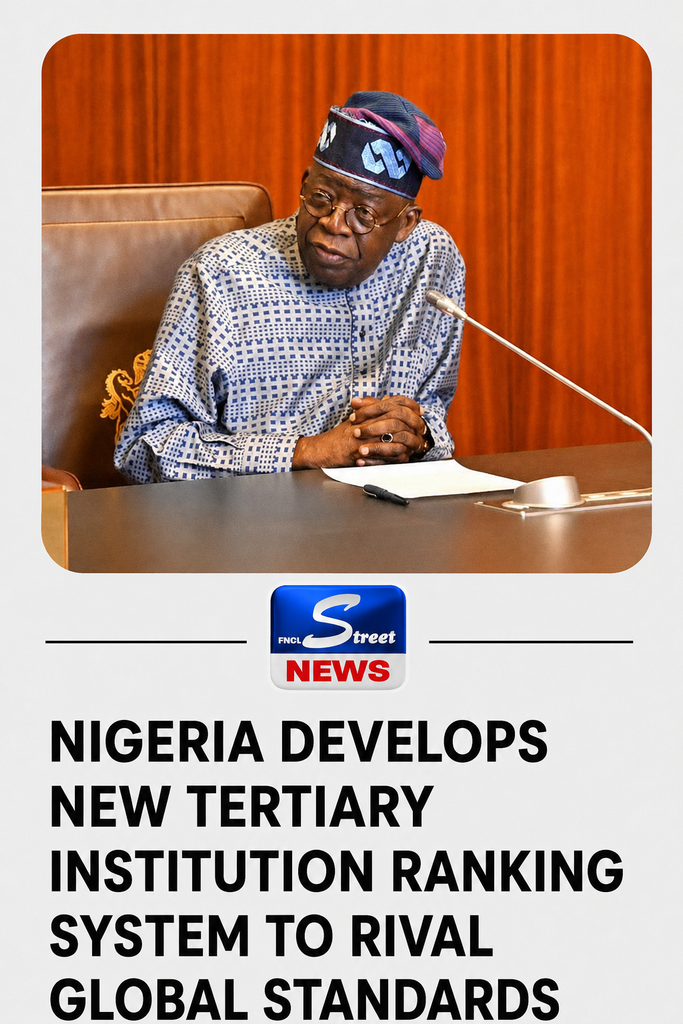
Nigeria To Launch Expanded Tertiary Ranking System For Universities, Polytechnics, Colleges Of Education
The Federal Government has announced plans to strengthen Nigeria’s national tertiary institution ranking system and expand its coverage to universities, polytechnics and colleges of education.
Table Of Content
The Minister of Education, Dr Tunji Alausa, disclosed this in a post on X on Tuesday following the release of the 2026 Times Higher Education rankings, which featured 24 Nigerian universities.
Alausa said he and the Minister of State for Education, Suwaiba Said Ahmad, met with members of the Nigerian University Ranking Advisory Committee (NURAC) and the Tertiary Education Trust Fund (TETFund) to discuss ways of improving Nigeria’s homegrown ranking framework.
“Did you know Nigeria has its own university ranking system?” the minister asked.
He explained that the government wants to develop a ranking system that better reflects the realities, priorities and operating environment of Nigerian tertiary institutions, rather than relying solely on international ranking systems.
“For years, we have looked to international rankings to tell us how our universities are performing. These rankings are important, but we also need a system that understands our own institutions, our environment and our priorities,” Alausa said.
“That is what we are building.”
According to the minister, TETFund will support efforts to strengthen the national ranking framework, with the government aiming to develop a credible system that could eventually serve as a model for other countries across Africa.
Polytechnics, Colleges Of Education To Be Included
Alausa said the ranking exercise would no longer be restricted to universities, as polytechnics and colleges of education would also be assessed under the expanded framework.
He announced that NURAC would consequently transition into the Nigerian Tertiary Education Ranking Advisory Committee (NTERAC) to reflect the broader scope of the initiative.
“We are also going beyond universities. Polytechnics and Colleges of Education will now be included,” he said.
“To reflect this, NURAC will transition to the Nigerian Tertiary Education Ranking Advisory Committee (NTERAC), ensuring that all our tertiary institutions are captured and encouraged to continually improve.”
The minister said the new committee would help institutionalise the ranking process while assisting tertiary institutions in understanding the data, methodology and standards required to achieve credible rankings.
He added that improving Nigeria’s national ranking framework would also help local institutions perform better in international rankings.
“By improving how we collect, report and use institutional data, we can support more Nigerian universities to compete for recognition on global ranking systems such as Times Higher Education and others,” he said.
Ranking To Be Linked To Education Data Platform
Alausa disclosed that the national tertiary ranking system would be integrated into the Nigeria Education Data Initiative (NEDI) platform.
According to him, the integration would bring more education data together and give Nigerians clearer and more accessible information about the performance of tertiary institutions across the country.
The minister commended the NTERAC team, led by Professor Peter Okebukola, as well as TETFund for supporting the initiative.
He also announced that participation in the ranking exercise would be mandatory for all public and private tertiary institutions.
“Participation in the ranking will be mandatory for all public and private tertiary institutions, and I encourage our Vice-Chancellors, Rectors and Provosts to work with us to make it a success,” Alausa said.
Government Targets Global Competitiveness
The minister said the broader objective of the initiative was to raise the quality and competitiveness of Nigerian tertiary institutions and position them to compete more effectively with leading institutions globally.
“Why shouldn’t Nigeria have the Oxfords and Cambridges of Africa?” Alausa asked.
“We have the talent. We have the institutions. Now, we must continue to raise the standard.”
He added that President Bola Tinubu’s administration remained committed to turning the ambition into reality by improving the quality, data systems and global competitiveness of Nigeria’s tertiary education sector.
