



Nigeria Imports ₦68 Billion Worth Of Palm Oil From Liberia, Two Others In Three Months Despite Being Africa’s Largest Producer

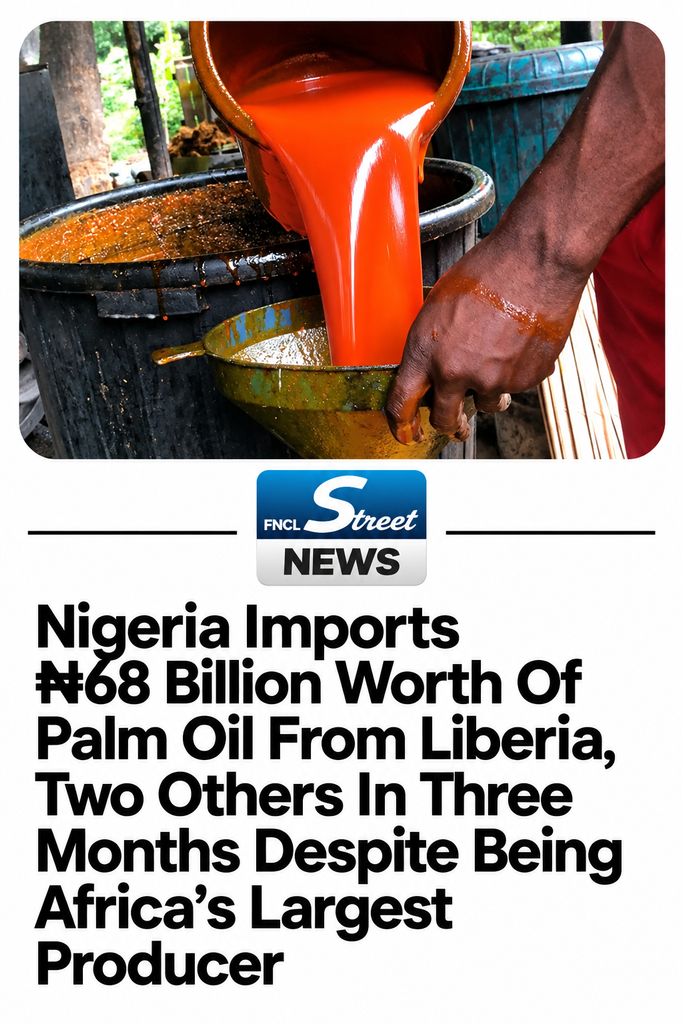
Nigeria Imports ₦68 Billion Palm Oil From Liberia, Côte d’Ivoire And Ghana Despite Being Africa’s Largest Producer
Nigeria imported crude palm oil worth about ₦68 billion from three West African countries in the first half of 2026, despite being recognised as Africa’s leading palm oil producer and the fifth-largest producer globally.
According to data from the National Bureau of Statistics (NBS), Nigerian businesses imported crude palm oil worth approximately ₦23 billion from West African countries between January and March 2026.
The import bill rose significantly in the second quarter, with Nigeria importing crude palm oil worth about ₦51 billion from Liberia between April and June 2026.
A further ₦15 billion worth of the commodity was imported from Côte d’Ivoire during the period, while another ₦2 billion was spent on crude palm oil imported from Ghana.
The figures bring the reported value of palm oil imports from the three West African countries to about ₦68 billion, highlighting the growing gap between domestic production and consumption in Nigeria.
The development is notable because the United States Department of Agriculture (USDA) ranks Nigeria as the fifth-largest palm oil producer in the world and the leading producer on the African continent.
Agricultural data and industry groups, including the Council of Palm Oil Producing Countries and the National Palm Produce Association of Nigeria, estimate that Nigeria produces roughly 1.5 million metric tonnes of palm oil annually, representing about two per cent of global output.
Nigeria’s production, however, remains significantly below that of the world’s leading producers, including Indonesia, Malaysia, Thailand and Colombia.
The continued dependence on imports has raised questions about the country’s ability to meet domestic demand despite its substantial natural and agricultural capacity for palm oil production.
Palm oil is an important commodity in Nigeria and is widely used in food production, cosmetics, pharmaceuticals and industrial manufacturing.
It is also a major raw material for soap, detergents and other consumer products, while households and food processors depend heavily on the commodity.
The rising import figures therefore highlight persistent challenges within Nigeria’s palm oil value chain, including limited productivity, inadequate investment and difficulties faced by farmers and processors.
Although Nigeria produces large quantities of palm oil, rising domestic consumption has contributed to a supply gap, creating opportunities for neighbouring countries to supply the Nigerian market.
The development comes despite previous efforts by the Central Bank of Nigeria (CBN) to increase domestic palm oil production through its Oil Palm Development Initiative.
The initiative, introduced in 2019, was designed to address an estimated annual palm oil supply gap of 1.25 million metric tonnes while developing the oil palm value chain, improving productivity, creating jobs and supporting economic diversification.
However, the scale of imports recorded in 2026 suggests that significant challenges remain in expanding domestic production and ensuring that local supply keeps pace with demand.
There have also been concerns over the condition and management of some major palm oil plantations across the country, with critics blaming successive administrations for inadequate investment and poor maintenance of key plantations.
Farmers and industry stakeholders have continued to advocate stronger government support for small-scale oil palm producers, who account for a significant proportion of Nigeria’s agricultural activity.
They argue that greater investment in improved seedlings, access to finance, modern farming techniques, processing facilities and infrastructure could help increase yields and reduce Nigeria’s dependence on imported palm oil.
The latest import figures have consequently renewed the debate over Nigeria’s ability to fully exploit its position as Africa’s leading palm oil producer and transform the sector into a stronger contributor to food security, employment and economic growth.
