


EXCLUSIVE: YOBE SETS ASIDE N20BN FOR AIRPORT, MARKETS, CONSULTANCY DESPITE HIGH OUT-OF-SCHOOL RATE

Yobe Plans Nearly N20bn For Airport, Markets, Boreholes, Consultancy As 63% Of Children Remain Out Of School
September 1, 2026
Table Of Content
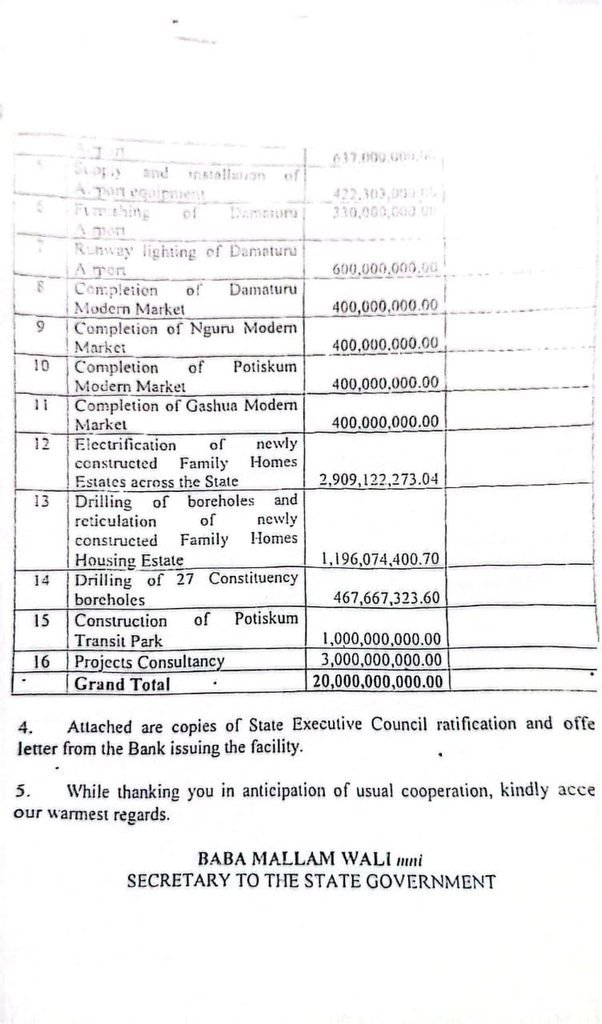
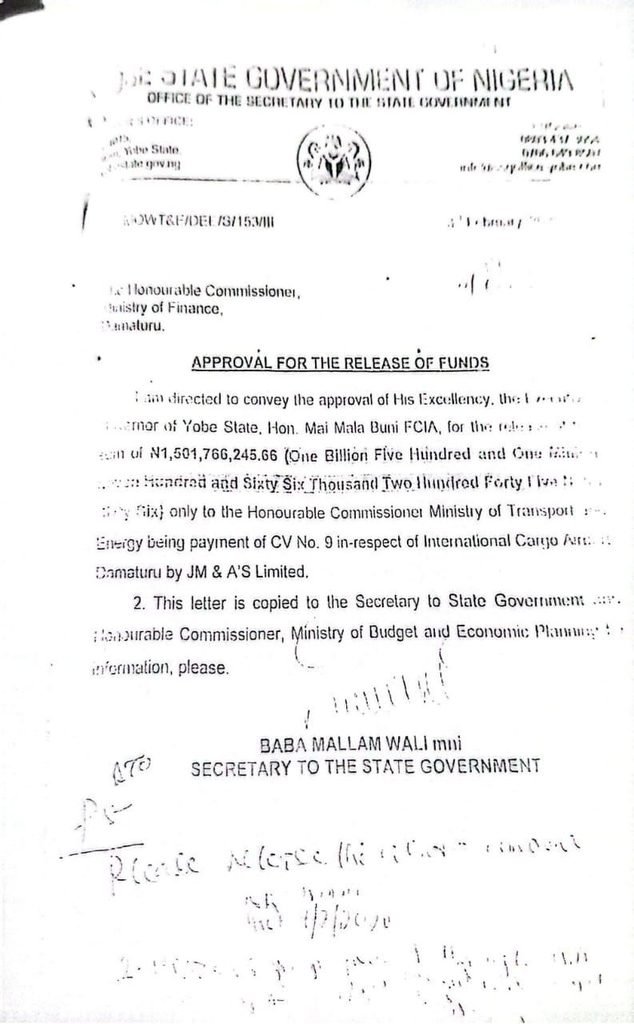
A document obtained by Street News Reporters has raised questions about the spending priorities of the Yobe State Government after an official letter revealed the approval of ₦1.5 billion for the International Cargo Airport, Damaturu, while an accompanying project schedule contains proposed projects with a combined value of nearly ₦20 billion.
The letter, signed by the Secretary to the Yobe State Government, Baba Mallam Wali, stated that Governor Mai Mala Buni approved the release of ₦1,501,766,245.66 to the Ministry of Transport and Energy for payments relating to the International Cargo Airport, Damaturu.
The accompanying project schedule lists several other major expenditures, including airport equipment, furnishing and runway lighting, the completion of modern markets in Damaturu, Nguru, Potiskum and Gashua, electrification of family homes, drilling of boreholes, construction of the Potiskum Transit Park and ₦3 billion for project consultancy.
The scale of the proposed spending has prompted questions about whether the state’s current investment priorities adequately reflect the urgent needs of residents, particularly communities facing limited access to education, potable water and other basic services.
Education Crisis
The concerns are particularly significant given Yobe’s longstanding education challenges.
Data from Nigeria’s 2022 Multidimensional Poverty Index showed that approximately 730,000 children between the ages of six and 15 in Yobe State were out of school, representing 62.9 per cent of the state’s school-age children.
The figure placed Yobe third among Nigerian states with the highest proportion of children out of school, behind Kebbi at 67.6 per cent and Sokoto at 66.4 per cent.
The same data estimated Yobe’s school-age population at about 1.17 million, meaning that nearly two out of every three children in the age bracket were not attending school.
The education crisis has persisted amid wider humanitarian and socioeconomic challenges affecting Yobe and other parts of Nigeria’s North-East.
In November 2024, the United Nations Children’s Fund (UNICEF) reported that approximately two million children across Borno, Adamawa and Yobe were out of school, with prolonged insurgency, displacement, poverty and other crises severely disrupting access to education.
Yobe has also continued to experience disruptions to basic infrastructure, including schools.
UNICEF reported that 31 schools in Yobe were affected by flooding between July and October 2024, further contributing to disruptions in learning across the three North-East states.
Water Projects
Water infrastructure also accounts for a significant portion of the projects contained in the nearly ₦20 billion schedule.
The document lists more than ₦1.196 billion for the drilling of boreholes and reticulation for the newly constructed Family Homes Housing Estate.
A further ₦467.6 million was earmarked for the drilling of 27 constituency boreholes.
The allocations raise questions about the implementation and current status of the projects, particularly whether the substantial funds allocated have translated into functional water facilities for residents.
The state government could provide greater transparency by disclosing the locations of the boreholes, the contractors awarded the projects, the amounts eventually paid, completion certificates and the current operational status of the facilities.
Such details would help establish whether the funds allocated for water infrastructure have resulted in functioning facilities serving the communities for which they were intended.
Airport, Markets And Consultancy
Beyond education and access to potable water, the project schedule raises further questions about the allocation of billions of naira to airport infrastructure, markets and consultancy while Yobe continues to face significant developmental challenges.
The ₦3 billion consultancy allocation is particularly notable given its size relative to several of the other projects listed in the schedule.
Details concerning the nature and scope of the consultancy services, the companies or individuals engaged, contract values and the work delivered would provide greater clarity on how the allocation is being utilised.
With nearly two-thirds of Yobe’s school-age children reportedly out of school, questions remain over how the state’s substantial development spending is being prioritised and whether the allocations are sufficiently aligned with the most pressing needs of its residents.
Street News Reporters understands that greater disclosure of project details, expenditure records and implementation status would allow residents and taxpayers to assess the impact of the government’s spending and determine whether the projects are delivering value to the people of Yobe.