



149 Detainees, Including Children, Died In Five Months At Maiduguri Military Jail — Amnesty International

1
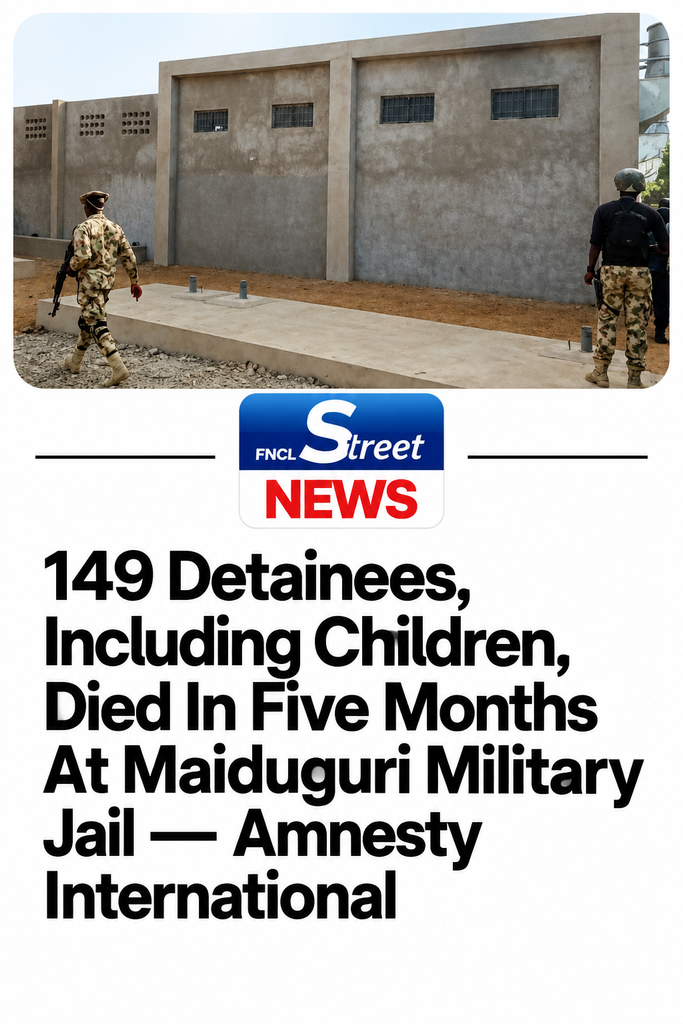
149 Detainees, Including Children, Died In Five Months At Maiduguri Military Jail — Amnesty International
At least 149 people, including children, died within five months after being detained at the Giwa Barracks military detention centre in Maiduguri, Borno State, according to Amnesty International.
The human rights organisation made the disclosure in a report published in May 2016, documenting the conditions of detainees held at the military facility amid the Nigerian military’s operations against Boko Haram in the North-East.
According to Amnesty International, the deaths occurred between January and April 28, 2016, with March recording the highest number of deaths. The organisation said 65 detainees died during that month alone.
Amnesty said at least 11 children under the age of six were among those who died during the period covered by its investigation. Another Amnesty account said at least 12 children had died at the facility since February.
The organisation based its findings on interviews with former detainees and eyewitnesses, as well as photographs and video evidence. It said the evidence indicated that detainees were being held in severely overcrowded and unsanitary conditions.
Amnesty reported that around 1,200 people were still being detained at Giwa Barracks at the time of its investigation. The organisation said children, including babies, were among those being held at the facility.
According to the report, children under the age of five, including babies, were being kept in three overcrowded cells. Amnesty said the number of detainees in those cells had increased significantly, contributing to poor sanitary conditions and the spread of disease.
The organisation said witnesses reported seeing the bodies of several children who had died while in detention. The reported victims included a five-month-old baby and children between one and five years old.
Former detainees also reportedly described severe shortages of food and water, extreme heat, overcrowding and inadequate sleeping arrangements. One former detainee who spent months at the facility described the cells as so congested that inmates could barely move while lying on the floor.
Amnesty further reported that disease was widespread inside the detention centre because of poor sanitation and limited access to adequate medical care. Witnesses cited by the organisation described illnesses including diarrhoea and measles among detainees.
The organisation also raised concerns over the circumstances surrounding the deaths, saying that many detainees appeared to have died from disease, hunger, dehydration or gunshot wounds. However, Amnesty noted that the exact causes of death could not be conclusively established because proper investigations and autopsies had not been carried out by the authorities.
Amnesty also alleged that the bodies of deceased detainees were taken from a mortuary in Maiduguri and transported for burial in unmarked graves. The organisation said satellite imagery and witness accounts supported its findings concerning the disposal of bodies.
The report further alleged that many people detained at Giwa Barracks had been arrested during mass operations targeting suspected Boko Haram members. Amnesty said some detainees appeared to have been arrested without sufficient evidence of criminal wrongdoing and were held without access to their families or judicial proceedings.
The human rights organisation called on the Nigerian authorities to investigate the deaths and improve the treatment of detainees. It also urged authorities to release children who were being held without sufficient grounds and address the conditions at the detention centre.
Amnesty said concerns about deaths and conditions at Giwa Barracks had existed for several years before the 2016 findings. It also recalled an earlier report alleging that thousands of detainees had died in Nigerian military detention facilities since 2011 as a result of starvation, thirst, disease, torture and inadequate medical care.
The Nigerian military had previously disputed aspects of Amnesty International’s reports and maintained that conditions in its detention facilities had improved. The military also described Giwa Barracks and other facilities in the North-East as holding centres where suspects were processed and transferred.
The findings documented by Amnesty International have continued to draw attention to the treatment of detainees during Nigeria’s counter-insurgency operations and the need for security operations to comply with human rights and due-process standards.
Street News Reporters notes that the figures and allegations in this report relate to Amnesty International’s investigation published in 2016 and should not be interpreted as current figures for deaths at Giwa Barracks.
