



NIGERIAN HIGH COMMISSION IN UK ACCUSED OF IMPOSING UNAUTHORISED PASSPORT CHARGES ON NIGERIANS

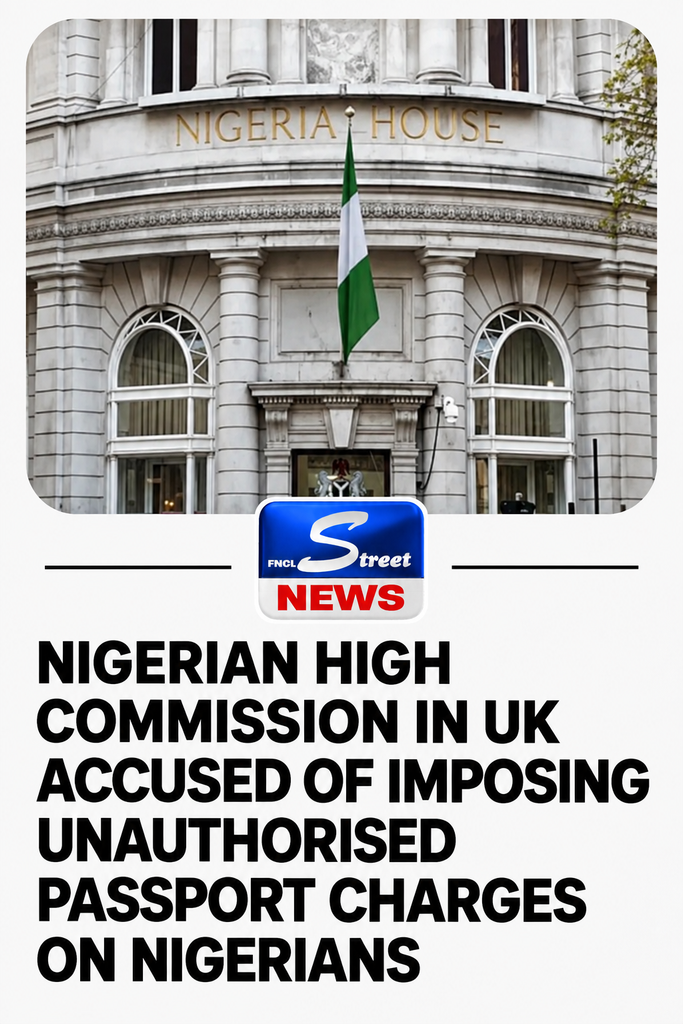
NIGERIAN HIGH COMMISSION IN UK ACCUSED OF IMPOSING UNAUTHORISED PASSPORT CHARGES ON NIGERIANS
The Nigerian High Commission in the United Kingdom has come under scrutiny following allegations that Nigerians participating in the ongoing special passport intervention exercise are being subjected to additional charges beyond the officially approved passport fees.
The Nigerians in Diaspora Civic Forum has accused the Nigerian High Commission in London of imposing what it described as unauthorised charges on Nigerians seeking to obtain or renew their international passports through the special intervention programme.
The organisation, in a statement signed by its spokesperson, Christopher Babafemi Akinola, said the additional charges should not be attributed to the Ministry of Interior or the Nigeria Immigration Service (NIS), insisting that the disputed fees were being imposed by the Nigerian diplomatic mission in the United Kingdom.
The controversy comes amid complaints from Nigerians in the UK over difficulties with appointment slots, delays and additional payments connected with the special passport intervention exercise being conducted by the NIS in collaboration with the Nigerian High Commission.
According to the Forum, the official passport fees for the intervention remain $150 for a five-year validity passport and $230 for a 10-year passport, excluding applicable bank charges.
It said neither the Ministry of Interior nor the Nigeria Immigration Service had introduced additional charges outside the approved passport fees.
The group therefore called on the Ministry of Foreign Affairs and the Nigerian High Commission in the UK to explain the basis for any additional payments being demanded from applicants.
The Forum said Nigerians in the diaspora had initially blamed the Ministry of Interior for the extra charges but argued that available evidence pointed instead to the Nigerian High Commission and, by extension, the Ministry of Foreign Affairs.
It explained that passport issuance within Nigeria falls under the Ministry of Interior and the Nigeria Immigration Service, while passport services for Nigerians abroad involve the Ministry of Foreign Affairs and Nigerian diplomatic missions.
The organisation argued that the High Commission, because of its control of the diplomatic premises and consular responsibilities in the UK, should accept responsibility for charges associated with its operations rather than allowing Nigerians to believe that the additional payments were introduced by the Interior Ministry.
The controversy has been further fuelled by allegations from an official within the Nigerian High Commission who spoke anonymously about the passport exercise.
The official alleged that applicants were being charged an additional £70 and claimed that appointment slots were being issued beyond the daily capacity initially agreed with immigration officials.
According to the official, the Nigeria Immigration Service had initially planned to process a maximum of about 90 applicants per day at the intervention centres.
The source alleged that the High Commission subsequently accommodated significantly more applicants, with claims that appointment slots were being sold to hundreds of people, creating congestion and contributing to the difficulties experienced during the exercise.
The official also alleged that some applicants were subjected to additional payments beyond the statutory passport fees, describing the alleged practice as extortion.
However, the Nigerian High Commission’s own website reportedly lists a £70 payment for applicants participating in the September 2026 Special Passport Intervention Exercise.
The website states that the intervention exercise is being conducted by the Nigeria Immigration Service in collaboration with the Nigerian High Commission at four locations across the United Kingdom.
Applicants are reportedly instructed to present a £70 postal order payable to the Nigerian High Commission or make the payment through the mission’s electronic payment system.
The High Commission also separately lists a charge of £150 for passports that have been lost, misplaced or damaged.
This information has added another layer to the controversy because the Federal Government has simultaneously maintained that Nigerians participating in the intervention programme should not be subjected to charges beyond the officially approved passport fees.
The Minister of Interior, Olubunmi Tunji-Ojo, through his spokesperson, Alao Babatunde, said the government was concerned about the difficulties experienced by Nigerians in the UK during the exercise.
The minister’s office clarified that the official passport charges remained $150 for five-year passports and $230 for 10-year passports, excluding bank charges.
It further stated that neither the Ministry of Interior nor the Nigeria Immigration Service had introduced any other charges outside those approved fees.
The Federal Government said consultations were ongoing with the Ministry of Foreign Affairs to address the difficulties and ensure that Nigerians participating in the intervention exercise were not subjected to unnecessary inconvenience.
The conflicting information has consequently left applicants with questions about the exact status of the £70 payment and which government institution authorised it.
The situation is particularly sensitive because the special passport intervention exercise was introduced to make passport processing easier for Nigerians living outside the country and provide an alternative avenue for those struggling with regular appointment systems.
The Nigerians in Diaspora Civic Forum said the initiative itself was important and had worked successfully in countries including the United States and Canada.
It argued that the United Kingdom should not become an exception because of administrative disagreements or additional charges allegedly imposed by the Nigerian mission.
The Forum also warned that delays in passport processing could create serious problems for Nigerians planning to travel, particularly those intending to return to Nigeria during the Christmas and New Year period.
For Nigerians whose passports are expiring or who need to renew their travel documents urgently, prolonged delays could affect international travel arrangements and create additional financial burdens.
The group therefore called for closer cooperation between the Nigeria Immigration Service, Ministry of Interior, Ministry of Foreign Affairs and the Nigerian High Commission in London.
It urged the government to clearly publish all approved charges and ensure that applicants are not required to make payments that are not backed by official regulations.
The allegations also raise broader questions about transparency in the operation of Nigerian diplomatic missions abroad, particularly regarding consular fees and payments made by citizens seeking government services.
For now, the Ministry of Interior has maintained that it did not introduce additional charges for the special passport intervention programme, while the High Commission’s published information appears to acknowledge a £70 payment connected to the exercise.
The disagreement therefore requires clarification from the Ministry of Foreign Affairs and the Nigerian High Commission to establish the legal and administrative basis for the payment.
Until such clarification is provided, Nigerians participating in the programme remain caught between conflicting claims over what they are required to pay and which agency is responsible for the disputed charges.
The Federal Government is expected to address the matter as consultations between the relevant ministries continue.
Street News Reporters will continue to monitor the controversy and report any official clarification from the Nigerian High Commission, Ministry of Foreign Affairs, Ministry of Interior or Nigeria Immigration Service.
