



IVA VALLEY MASSACRE: VICTIMS’ LAWYER ACCUSES AGF FAGBEMI OF DEFENDING BRITISH INTERESTS, DEMANDS EXPLANATION

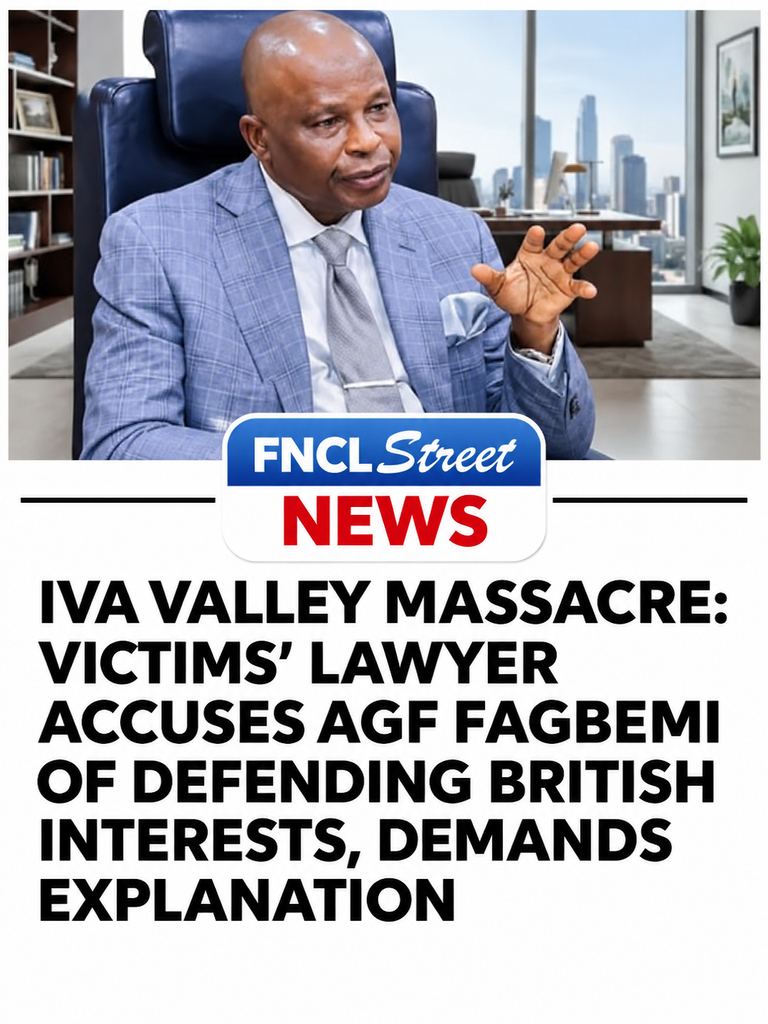
A lawyer representing victims’ families in the Iva Valley Massacre litigation, P. N. Agazie, has accused the Attorney-General of the Federation (AGF), Lateef Fagbemi, of allowing Nigeria’s highest law office to defend British interests against Nigerian families seeking compensation for the killing of 21 coal miners during British colonial rule.
Agazie called on Fagbemi to explain the legal basis for the Federal Government’s involvement in an appeal that also challenges a compensation judgment against British parties, arguing that Nigeria should not use its legal resources to defend those accused of responsibility for the 1949 killings.
The lawyer made the allegations in a statement on Tuesday, November 24, 2026, as controversy continued over the Federal Government’s participation in the appeal against a judgment delivered by the Enugu State High Court.
The Iva Valley Massacre occurred on November 18, 1949, when colonial police opened fire on striking coal miners at the Iva Valley coal mines in Enugu. Twenty-one miners were killed, while 51 others were reportedly injured during the incident.
The miners had embarked on industrial action over poor working conditions, wage-related disputes and discriminatory labour practices under British colonial administration. The killings generated widespread outrage and became an important moment in Nigeria’s labour and nationalist movements.
On February 5, 2026, Justice A. O. Onovo of the Enugu State High Court delivered judgment in a case instituted by human rights activist Mazi Greg Nwachukwu Onoh on behalf of the victims’ families.
The court awarded £20 million to each of the 21 affected families, bringing the total compensation to £420 million. The judgment also contained orders relating to formal apologies and responsibilities placed on the Nigerian government to pursue diplomatic engagement and compliance.
Agazie explained that the financial award was imposed against the foreign parties identified in the judgment, not against the Nigerian Federal Government. He stressed that Nigeria’s separate obligations under the ruling should not be confused with responsibility for paying the £420 million compensation.
According to the lawyer, the Federal Government and the Attorney-General of the Federation are separately challenging aspects of the judgment in Appeal No. CA/E/177/2026. However, he questioned why federal government lawyers were appearing in the same appeal for all six appellants, including the foreign parties seeking to overturn the compensation award.
He argued that Nigeria has a legitimate interest in challenging any court order affecting its own legal obligations, but maintained that such an appeal should be limited to issues concerning the Nigerian government.
Agazie further questioned whether the Attorney-General’s Chambers could adequately protect Nigeria’s interests while simultaneously advancing the legal defence of foreign parties whose interests could conflict with those of the Nigerian victims’ families.
Citing Sections 150 and 174 of the 1999 Constitution, he argued that the constitutional responsibilities of the Attorney-General do not expressly provide authority to represent a foreign government in civil litigation against Nigerian citizens.
He also referred to professional conduct rules governing legal practitioners and government lawyers, raising concerns about possible conflicts of interest arising from the joint representation. He maintained that the actual legal mandate and circumstances of the representation should be made public before any conclusion is reached about professional misconduct.
The lawyer called on Fagbemi to disclose who authorised the arrangement, the legal authority supporting it and the public interest being served by deploying federal government lawyers to represent the foreign appellants.
He also urged the Attorney-General to withdraw federal law officers from representing the foreign parties unless a clear and constitutionally defensible mandate could be established.
Agazie called on the National Assembly to exercise its oversight responsibilities by seeking explanations from the Federal Government. He also urged the Nigerian Bar Association to examine the professional and ethical implications of the joint legal representation.
The lawyer said Nigeria could defend its own lawful interests while pursuing diplomatic engagement with the United Kingdom over acknowledgement, accountability and possible reparation for the victims’ families.
He further argued that Nigeria should not allow its legal institutions to become instruments through which the interests of a former colonial power are advanced against citizens seeking redress for historical abuses.
The controversy comes as descendants of the 21 miners continue to demand justice, more than seven decades after the killings. On November 18, 2026, representatives of the victims’ families reportedly held a peaceful protest at the British High Commission in Abuja to mark the 77th anniversary of the massacre and renew their demand for compensation.
The compensation judgment remains subject to the ongoing appellate process, meaning the Court of Appeal will still determine the legal challenges brought against it. The allegations raised by Agazie concerning the Federal Government’s representation of the foreign parties also remain matters requiring clarification and, where appropriate, judicial or professional examination.
Street News Reporters will continue to monitor the appeal proceedings, the response of the Attorney-General of the Federation and further developments in the families’ pursuit of compensation and accountability over the 1949 Iva Valley Massacre.
