



IRAN THREATENS TO HALT ALL GULF OIL EXPORTS, CALLS SUPPORT FOR US SANCTIONS AN ‘ACT OF WAR’

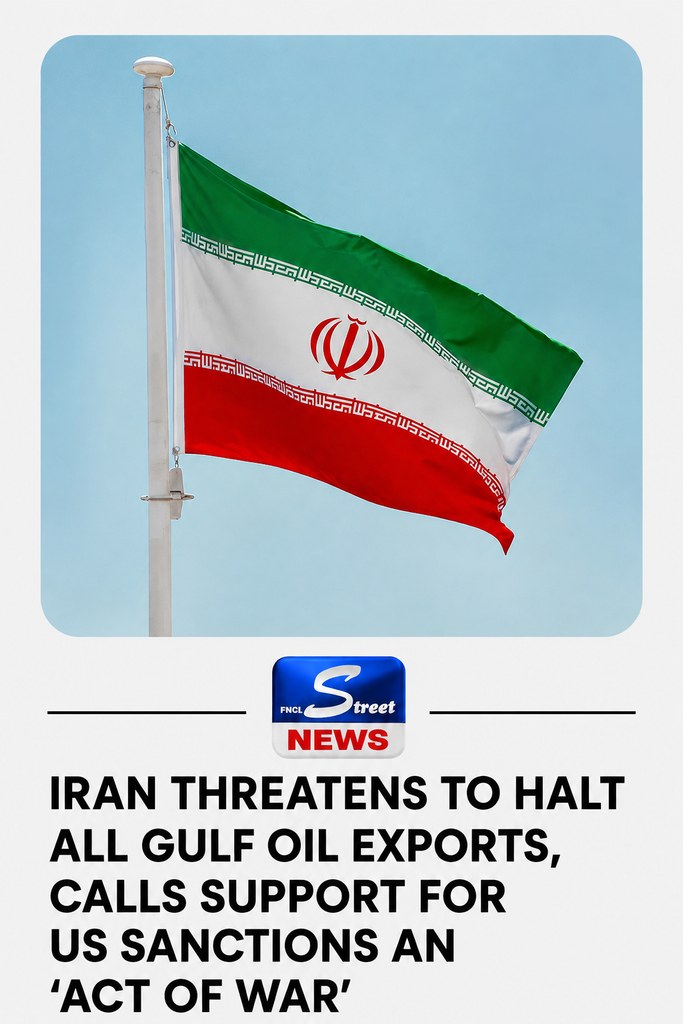
Iran Threatens To Halt Gulf Oil Exports, Warns US Allies Of ‘Act Of War’
Iran has issued a major warning over escalating tensions with the United States, threatening to halt oil exports through the Persian Gulf and the strategic Strait of Hormuz if Washington’s economic pressure campaign against Tehran continues.
Dr. Mohsen Rezaee, Secretary of Iran’s Supreme National Security Council, issued the warning in a statement on his official X account and during an interview with Iranian state broadcaster IRIB.
Rezaee said that if what he described as an American “economic war” against Iran continues, “not a single drop of oil” would leave the Persian Gulf or pass through the Strait of Hormuz. He also warned that any country supporting US sanctions or helping Washington bypass Iranian-controlled routes could be treated as an enemy.
“If the countries surrounding Iran join the Americans in the economic war, not a single drop of oil will leave the Persian Gulf and the Strait of Hormuz,” Rezaee said, adding that Iran could also target alternative routes used to export oil from the region.
The warning comes after US Treasury Secretary Scott Bessent called on international allies and trading partners to increase economic pressure on Tehran. Bessent said Washington was seeking what he described as the “greatest coordinated economic isolation” against Iran, including pressure on countries buying Iranian energy or conducting financial transactions with Iranian entities.
The Strait of Hormuz, located between Iran and Oman, is one of the world’s most important oil and gas shipping routes. A significant share of global petroleum and liquefied natural gas supplies passes through the waterway, linking major Gulf producers such as Saudi Arabia, Iraq, the United Arab Emirates, Kuwait and Qatar to international markets.
Iran has previously threatened to close or disrupt the Strait during confrontations with the US and its allies. However, Rezaee’s latest warning that participation in US sanctions could constitute an “act of war” has heightened concerns over the potential impact on global energy supplies and maritime security.
Rezaee also warned that if US President Donald Trump takes further action against Iran, Tehran would respond “in a seismic manner.”
The latest escalation follows Trump’s announcement of what he called the “most crushing economic operation against Iran”, urging US allies to join Washington in isolating Tehran after a 60-day negotiation period ended without a breakthrough.
Tensions have also spread across the Gulf region. The United Arab Emirates reportedly suspended economic ties with Iran after ballistic missiles were fired at its territory, although Tehran denied responsibility and accused Israel of carrying out a false-flag operation.
Meanwhile, maritime traffic through the Strait of Hormuz remains significantly below pre-conflict levels. According to figures cited from the UK Maritime Trade Operations centre, nearly 200 vessels crossed the Strait last week, compared with about 150 the previous week and only 40 two weeks earlier.
Data from Kpler also reportedly showed that many vessels crossing the waterway either used a US-backed route through Omani waters, which Iran considers illegal, or switched off their tracking systems.
The escalating confrontation has already raised concerns for international shipping, with five vessels reportedly struck by Iranian projectiles in the past week, leaving two people dead or injured according to the reports, while all five vessels sustained damage.
Any prolonged disruption to the Strait of Hormuz could have significant consequences for global oil prices, energy supplies and international shipping, given the waterway’s importance to the global energy market.
